
Iosco County Sex Offender Checks
The Michigan Public Sex Offender Registry, or PSOR, is the main public search for Iosco County. Michigan State Police maintains it. Iosco County does not publish a separate sheriff registry database or mobile app. The county filter, name fields, address tools, and list or map views support searches for community awareness.
The official portal is designed around public registry records, not all criminal cases. It can change as people update information or as law controls what may be shown.
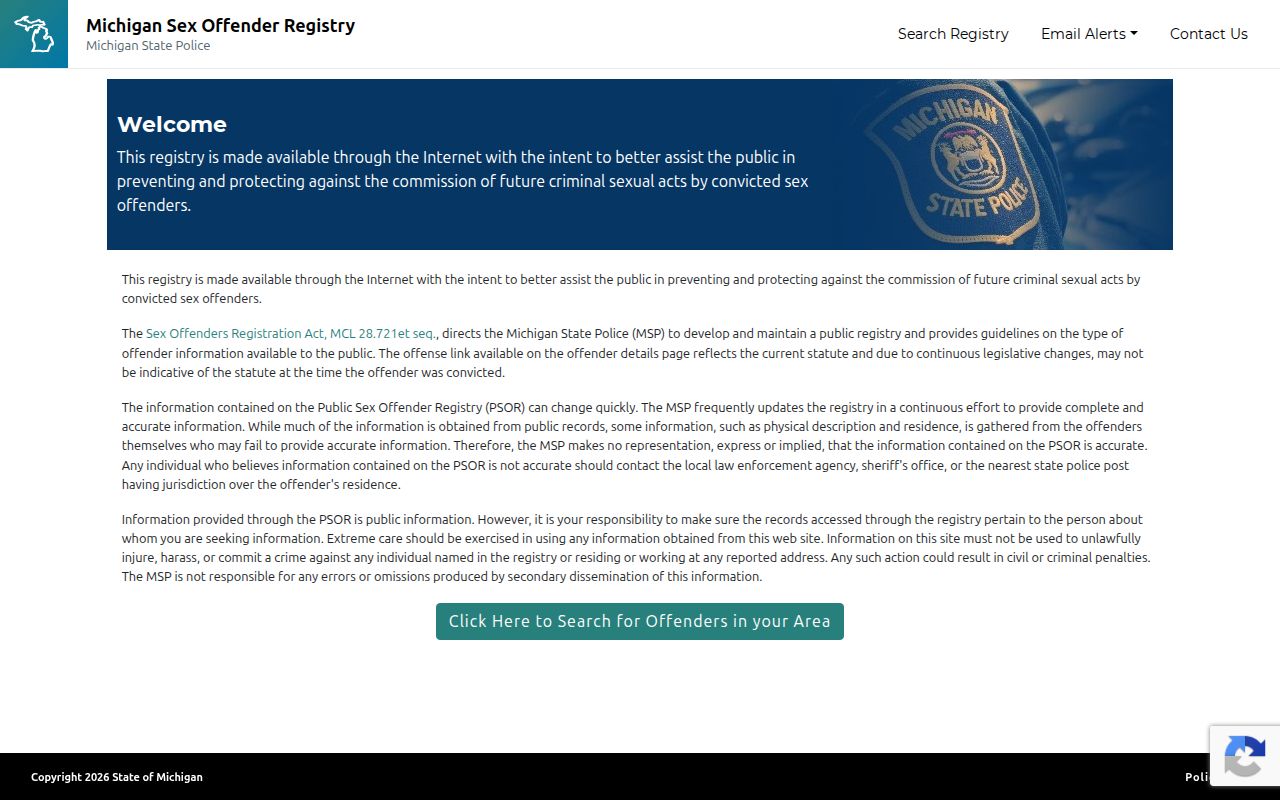
Use the live Iosco County registry result and then open the full profile before relying on a name or map point.
Iosco Sheriff Registry Services
Iosco Sheriff’s Control Center performs local sex-offender registration at 428 W. Lake Street, Tawas City, MI 48763. Call 989-362-6164 before appearing. A person’s reporting method and appointment needs depend on the required update and legal status. County staff carry out registration duties, but they do not set a tier or add a person based on suspicion.
Iosco Sheriff Control Center
428 W. Lake Street
Tawas City, MI 48763
989-362-6164
MSP Registry Help
Registry Hotline
866-761-7678
Registry office: 517-241-1806
The MSP sex-offender registration page supplies statewide information and registry-help routing.
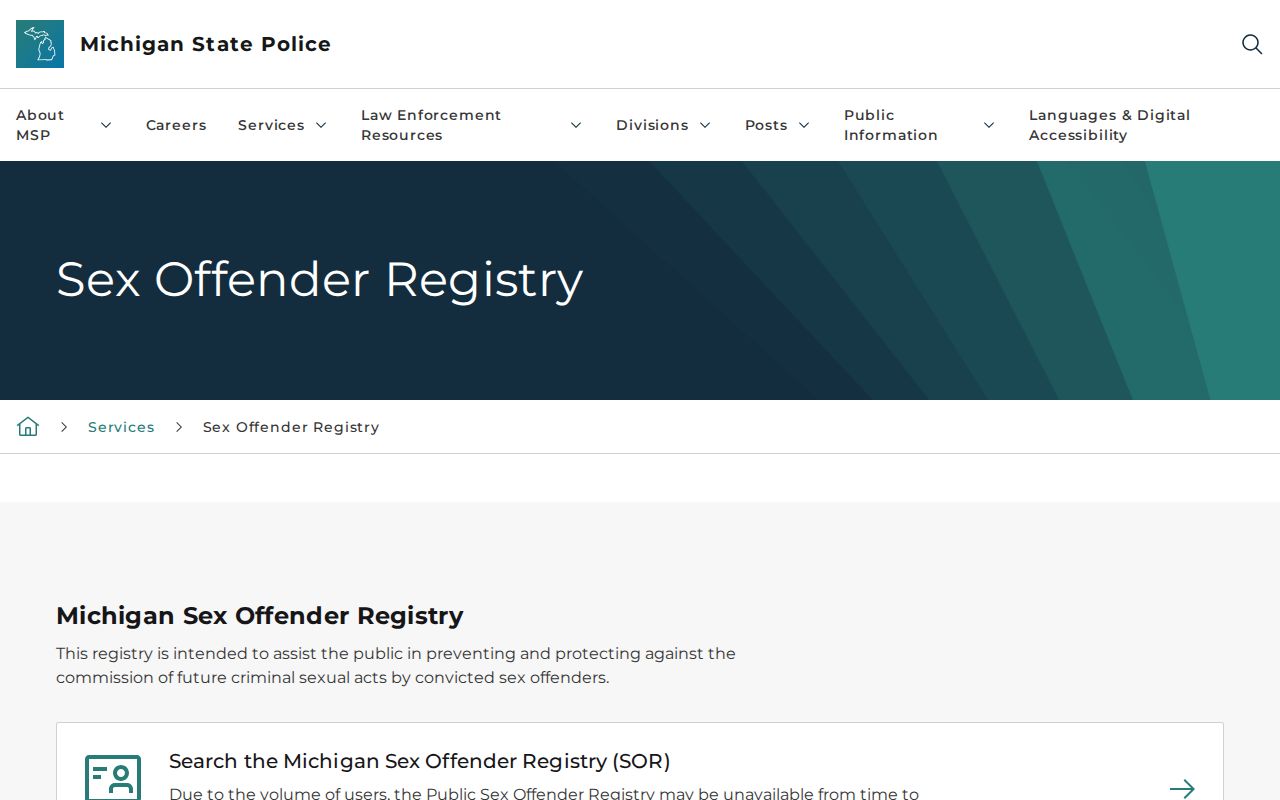
That state source is the best place to confirm a rule before choosing mail-in or in-person reporting.
Michigan Public Sex Offender Registry Searches
PSOR accepts either identity or location details. A county-only search can begin with Iosco selected in the county control. A name search may be more exact, while city, ZIP, address, radius, list, and map controls help with geographic awareness. Portal options can change, so read the labels and conditions displayed during the search.
- Open Michigan PSOR and review its conditions and accuracy notices.
- Enter a name or select Iosco County, a city, ZIP code, address, and radius where offered.
- Review list or map results, then compare the permitted identifiers carefully.
- Open the official profile and read its offense, registration, address, and status fields.
| PSOR field | Type | Required | Search note |
|---|---|---|---|
| Offender Name | Text | No | Identity search |
| City | Text or select | No | Locality filter |
| ZIP Code | Text | No | Five-digit geographic filter |
| County | Dropdown | No | Select Iosco |
| Address | Text | No | Geographic search where offered |
| Radius | Dropdown | Conditional | Options depend on the current portal version |
| List or Map | View control | No | Changes result presentation |
Begin broadly enough to avoid spelling or locality errors, then narrow. A county filter can find profiles tied to Iosco even when the city label is unexpected. Name searches should account for listed aliases. An address or radius result is a geographic aid, not proof that the marker identifies a precise unit, property line, or current physical location at every moment.
Iosco Registry Searches Across State Lines
The National Sex Offender Public Website searches participating jurisdictions. Add it when a person or address history may cross state lines. NSOPW broadens the geographic layer, but it does not replace Michigan PSOR for the live Iosco County record, nor does it create a new local registration office.
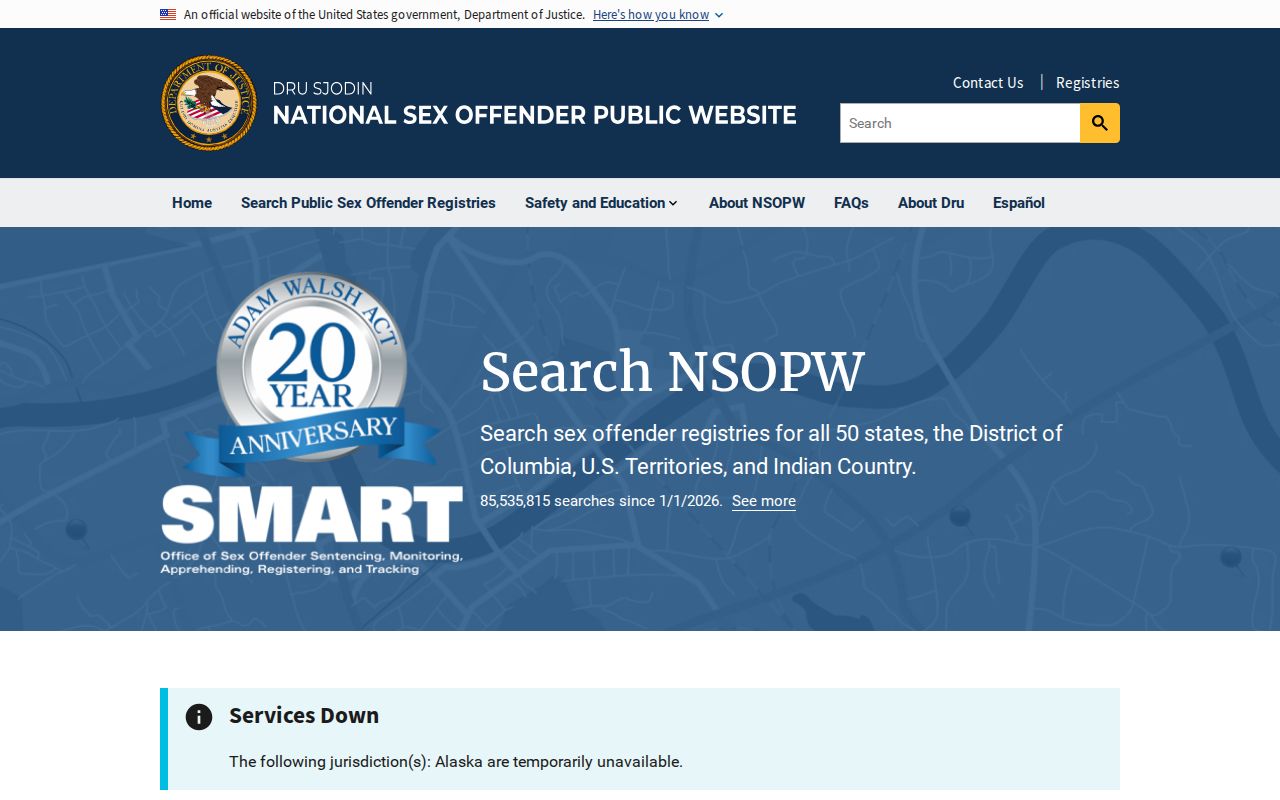
When the national and Michigan displays differ, confirm the current Michigan profile and ask the listed agency or MSP registry staff for help.
Registry Profiles: What They Show
A public registry profile combines identity, registration, offense, and location fields allowed by law. Not every field appears for each person. Missing data can reflect publication rules, a changed report, or an unavailable value. Never infer a person’s risk from a photograph, tier, or address alone.
| Name and Aliases | Reported identifying names used to distinguish the profile. |
|---|---|
| Photo and Description | Current photo where provided, plus permitted physical traits, marks, scars, or tattoos. |
| Registered Address | Primary, secondary, or temporary location at the public level allowed by statute. |
| Offense and Statute | Qualifying offense, jurisdiction, date, and legal citation where public. |
| Tier and Duration | Offense-based category and registration term under Michigan law. |
| Registration Status | Status or compliance information made public by the registry. |
| Other Identifiers | Vehicles or other required identifiers when Michigan law makes them public. |
Map points may be approximate, and addresses can change. Match several public identifiers. Report a likely error through official channels rather than republishing the profile or approaching the listed person.
Status and compliance fields need the same care. A portal label describes what the registry reports at that time. It is not a substitute for an investigation, and an omitted field cannot support a claim that no duty exists. When two profiles have similar names, compare the photo where supplied, aliases, physical descriptors, offense jurisdiction, and other lawful fields before deciding whether either result matches the intended search.
Why Some Iosco Registry Fields Stay Private
MCL 28.728 governs Michigan’s public registry database and helps define the public layer. Registration duties can require more information than the public can see. A missing detail does not mean the registrant never supplied it, and a visible tier does not summarize a person’s full history.
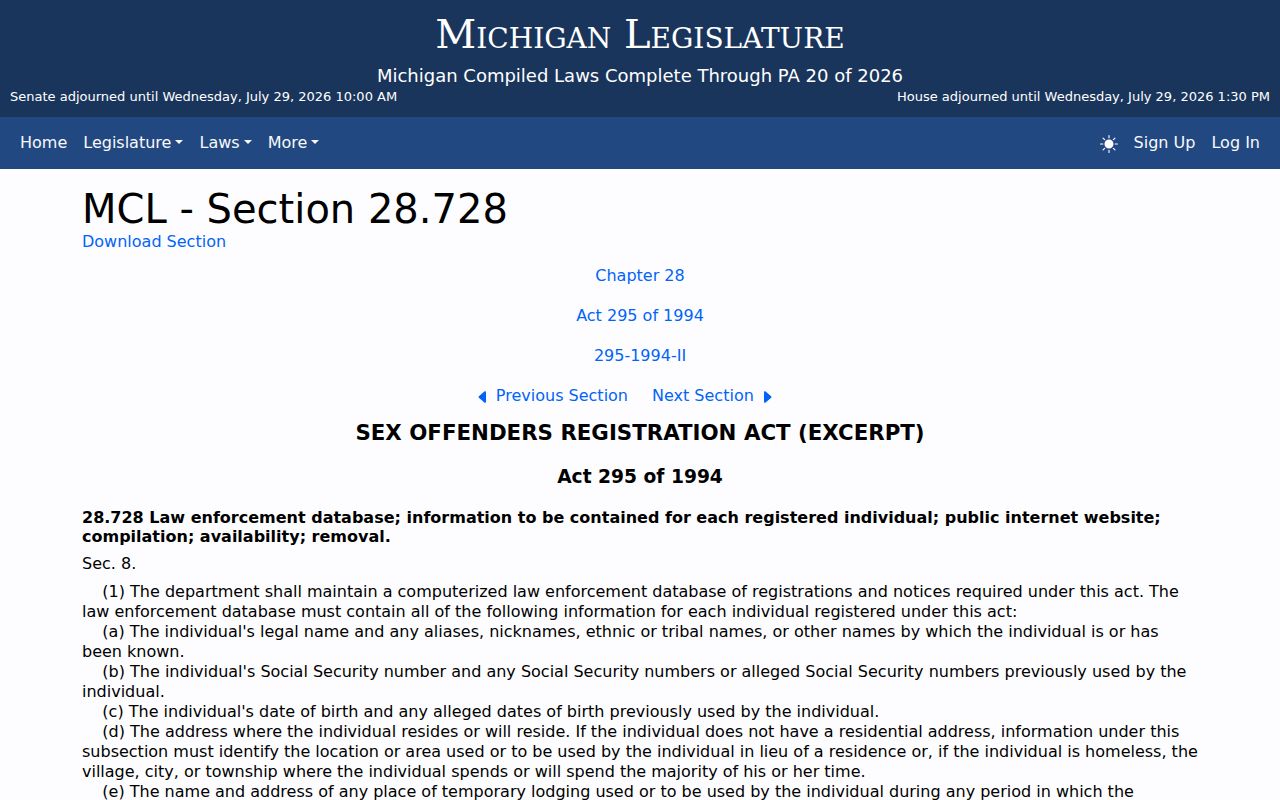
The statute-based public display protects community access while limiting fields according to current law.
Registration Levels and Duties in Michigan
Michigan uses offense-based SORA tiers, not individual risk scores. General terms are 15 years, 25 years, or life, subject to statutory rules. Verification grows more frequent by tier. Exact assignment, tolling, juvenile treatment, petition rights, and public visibility depend on the offense and current law.
| Tier | General duration | General verification concept | Public treatment |
|---|---|---|---|
| Tier I | 15 years | Generally annual | Depends on current Michigan and federal rules and offense |
| Tier II | 25 years | Generally semiannual | Public where statute requires |
| Tier III | Life | Generally quarterly | Public where statute requires |
Changes to residence, school or work, vehicles, email or internet identifiers, and temporary lodging can trigger reporting duties. MSP’s RI-004 form supports certain mail-in updates, including some vehicle, email, internet identifier, phone, or temporary-residence changes. The registrant must confirm whether an update instead requires an in-person report.
Iosco Registry Mail and In-Person Updates
RI-004 does not turn every update into a mail transaction. Michigan identifies certain fields that may use the form, while other changes can require personal reporting. Before sending anything, a registrant should confirm the current instruction with MSP or the Iosco Sheriff and keep proof of the submission. Calling first also helps avoid a trip with the wrong form or missing information.
Residence, school, employment, vehicles, electronic identifiers, phone numbers, and temporary lodging do not all follow one rule. The required time, place, and method depend on the type of change and the person’s legal duty. The live MSP instruction and current statute control, not an old copy of a form or an informal summary.
When an Iosco Registry Pin Looks Wrong
First open the full PSOR profile and compare the address text, status, and update details with the map. Do not assume the marker is exact. For a likely error, use the listed agency contact or call the MSP registry hotline at 866-761-7678. Suspected noncompliance can be reported to the Iosco Sheriff or MSP without confronting anyone.
Use 911 only for an emergency or immediate danger. A non-emergency reporting concern belongs with law enforcement. Official staff can assess whether a record is stale, a reporting duty applies, or an investigation is warranted.
Report Iosco Registry Noncompliance Safely
Write down the official profile link, the field that appears wrong, and the basis for the concern. Then contact the Iosco Sheriff or MSP registry staff. A clear report is more useful than posting the person’s data elsewhere. Law enforcement can compare nonpublic registration information and decide whether follow-up is needed.
Do not visit the address, contact household members, or attempt to enforce a reporting duty. Registry information can be incomplete or delayed, and direct confrontation creates risk. The official agency has the tools and legal role to check suspected noncompliance.
Using Registry Information Lawfully
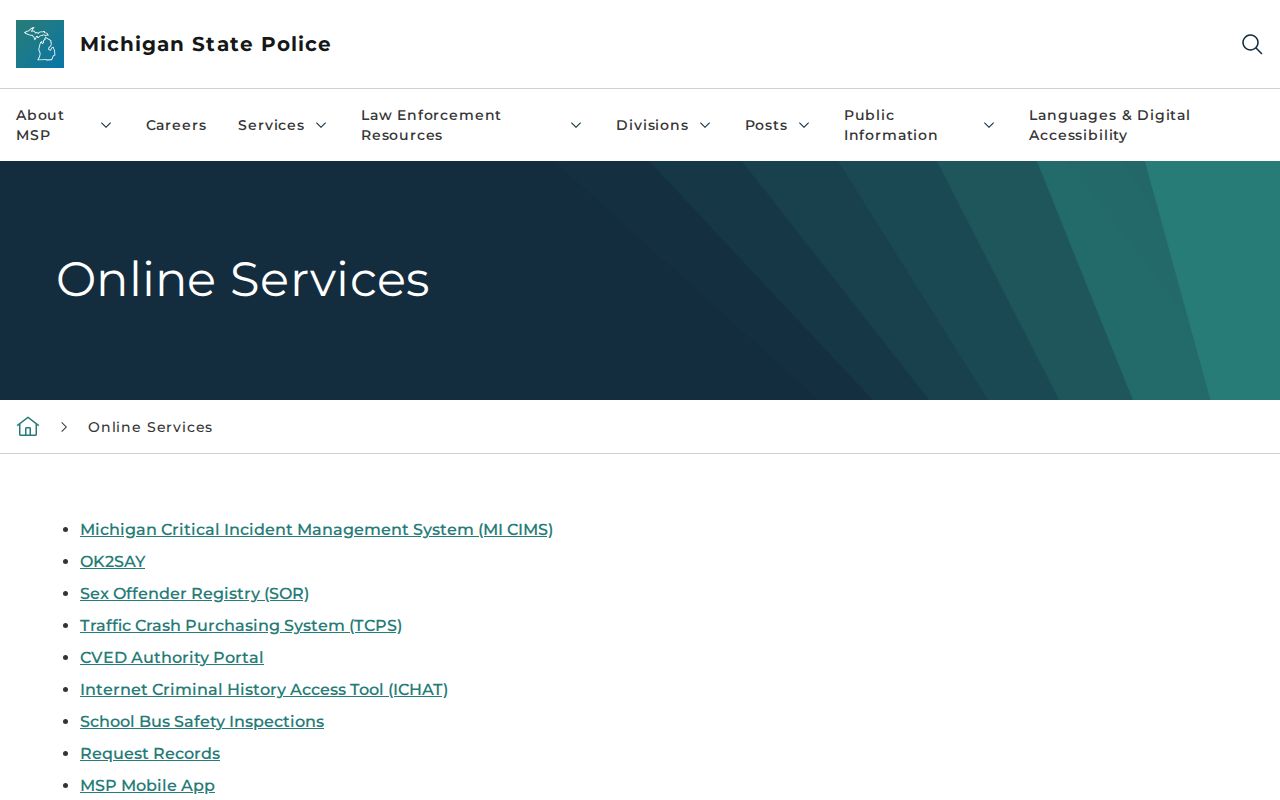
Registry information supports family safety, neighborhood awareness, and informed use of official alerts. Use any address-notification option shown on the live portal. No separate Iosco sheriff alert program or registry app was located. Michigan State Police does offer online services, but that does not create an Iosco-only registry product.
The MSP online-services directory links the state’s public tools.
Always return to PSOR for the current Michigan profile and to law enforcement for a safety or compliance concern.
Registry misuse is a crime: MCL 28.734 prohibits using registry information to commit a crime against a listed person or to engage in prohibited harassment.
Iosco Registry Limits and Context
Registry inclusion means a person meets statutory registration criteria. It does not forecast that a new offense will occur at a mapped location. Information can change, and some people or fields may be excluded from public display by law. Read the qualifying offense and date rather than relying on a photo or category alone.
Michigan’s geographic and school-safety rules have changed through litigation and amendment. No simple distance claim should replace the SORA text in force for the relevant date. County staff administer reports but cannot create a new restriction or change the legal tier on their own.
Public awareness works best when the search remains tied to a concrete safety need. Confirm the official record, note its update context, and use lawful alert or reporting options. A result should not be copied into an informal list, used to provoke a response, or treated as proof of a new crime. The public portal is one current statutory view of the registration record.
If a search produces no result, try an alias or wider location and add NSOPW when interstate movement is possible. Repeat the query with fewer filters when a city or ZIP may have changed. A no-hit still cannot prove that no confidential, excluded, or recently changed registration information exists.